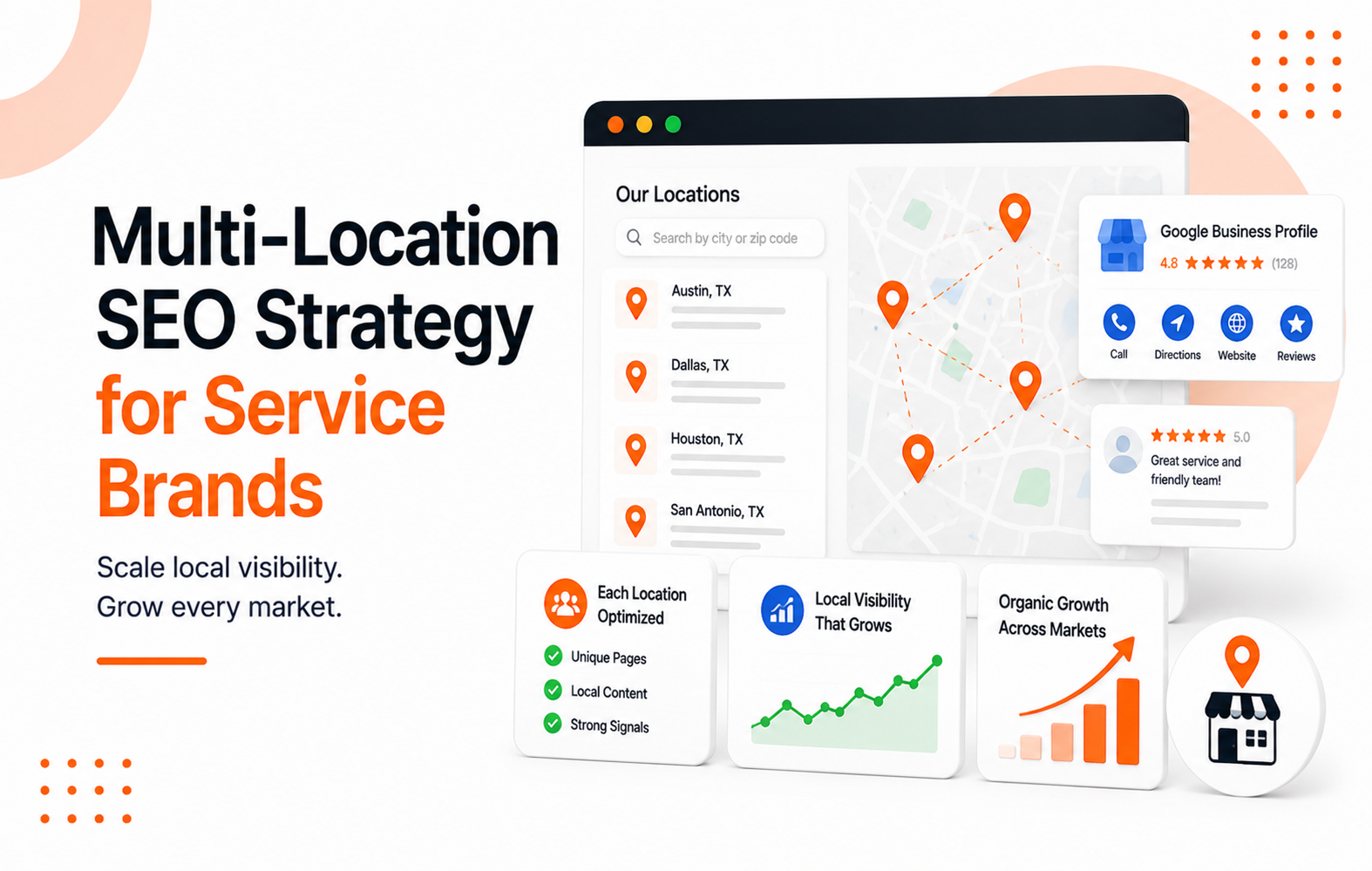
Managing fifty locations is a significant achievement in scale. However, without a cohesive approach, those locations can struggle to earn visibility in local search results, and in some cases, end up competing against each other for the same customers.
That is why a strong multi-location SEO strategy is not simply about publishing more pages. It is about creating a scalable system that search engines can understand, local teams can maintain, and customers can trust.
When done well, multi-location SEO helps every branch strengthen the brand's overall visibility while capturing demand in its local market. The result is sustainable organic growth that compounds over time instead of resetting every month like paid traffic.
Key Takeaways
- Build one clean structure for the entire brand, then optimize for local intent within that framework.
- Give every physical branch its own dedicated location page and a unique Google Business Profile to capture regional traffic.
- Use templates for efficiency, but fill them with unique content, local relevance, and genuine proof points.
- Maintain strict NAP consistency for your name, address, and phone number across your website, social profiles, and third-party directories.
- Measure success through leads, calls, and booked jobs by market rather than rankings alone.
Build One System for 50+ Locations
Once a service brand crosses 50 locations, random local marketing stops working. You need rules, ownership, and one source of truth.
The mess usually shows up in three places. Site structure becomes sloppy, profiles are half-managed, and different teams publish different phone numbers, hours, and service details.
Six months later, Google is confused because the lack of brand consistency makes it difficult to trust your data.
Create a Scalable Site Structure
Start with a solid website structure. Build a main locations hub using subfolders instead of subdomains to maximize your domain authority.
From there, create a searchable directory and one page per physical location. Then, add service-plus-location pages only when there is real search demand and real local context.
Do not crank out every service in every city just because the CMS makes it easy. That is how large brands bloat themselves into thin, repetitive pages.
For brands with years of old pages, broken redirects, and overlapping locations, scaling local SEO efforts usually starts with cleanup, not expansion.
Strengthen Internal Linking
Internal linking matters here too. Location pages should connect to core services, financing or booking pages, and nearby branches where it helps the user.
By strategically mapping these connections, you improve crawlability across your entire directory. Keeping high-value pages within a few clicks of your homepage helps search engines index your content efficiently while helping users navigate your site without friction.
Scale the system, localize the proof.
That is the job.
Create Location Pages That Earn Trust
This is where many large rollouts fall apart. The brand uses a generic template, swaps the city name, and calls it done.
Google has seen that movie before, and it rarely ends well. To avoid search penalties, your location pages must provide unique content that offers genuine value to the user.
Answer the Questions Customers Actually Have
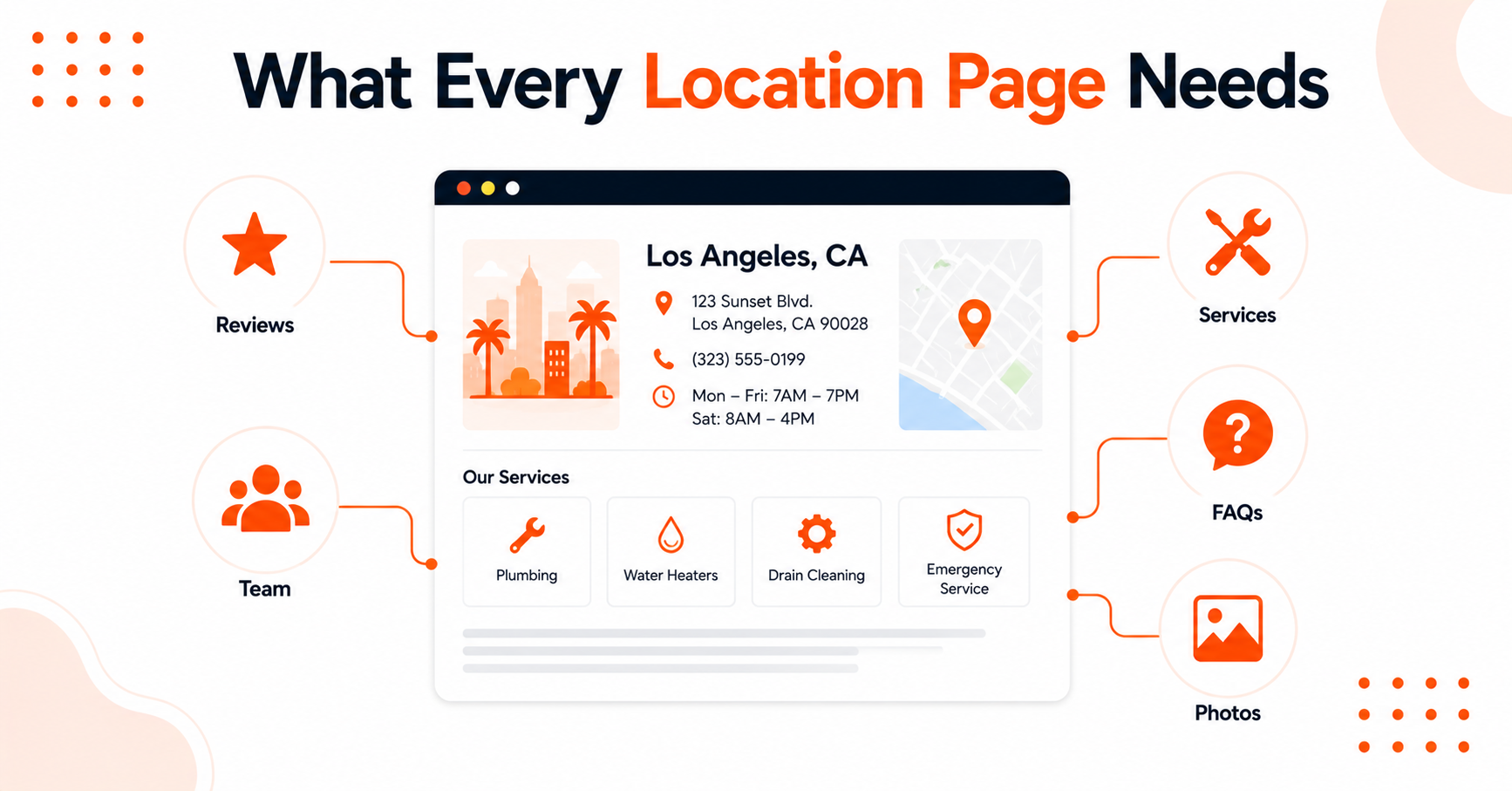
A high-performing landing page answers four questions quickly:
- What do you do?
- Where do you do it?
- Why should someone trust this branch?
- How does the customer contact the team today?
If a busy parent or stressed homeowner cannot figure that out in ten seconds on a mobile device, the page needs work.
Add Local Proof and Unique Content
Use a repeatable layout, but fill it with local details. Add the branch name, address, phone number, hours, and service-specific copy infused with relevant local keywords to help you rank in your specific market.
Include original photos, local testimonials, nearby landmarks, service-area notes, and team details when available. If one office handles same-day repairs and another does not, say it plainly.
Optimize for Modern Search Behavior
Search behavior has evolved. People still use Google, but they also ask full questions and expect immediate answers.
Format each page to make information extraction easy, as this can help you capture valuable near me searches. Put common questions in headings and answer them in the first line or two.
Short, direct answers often have a better chance of appearing in featured snippets, AI Overviews, and other answer-based results.
Structured data helps too. Implementing LocalBusiness schema, service markup, and visible FAQs gives search engines a clearer understanding of each branch.
While FAQ markup alone will not save a weak page, it reinforces your authority when the underlying content is strong.
If you want a second source that lands in the same place, this multi-location SEO guide is a solid reference.
Turn Profiles and Reviews Into Local Proof
Your website is only half the story. For many service brands, Google Business Profiles and visibility on Google Maps are the first things potential customers see.
Maintain Accurate Business Profiles
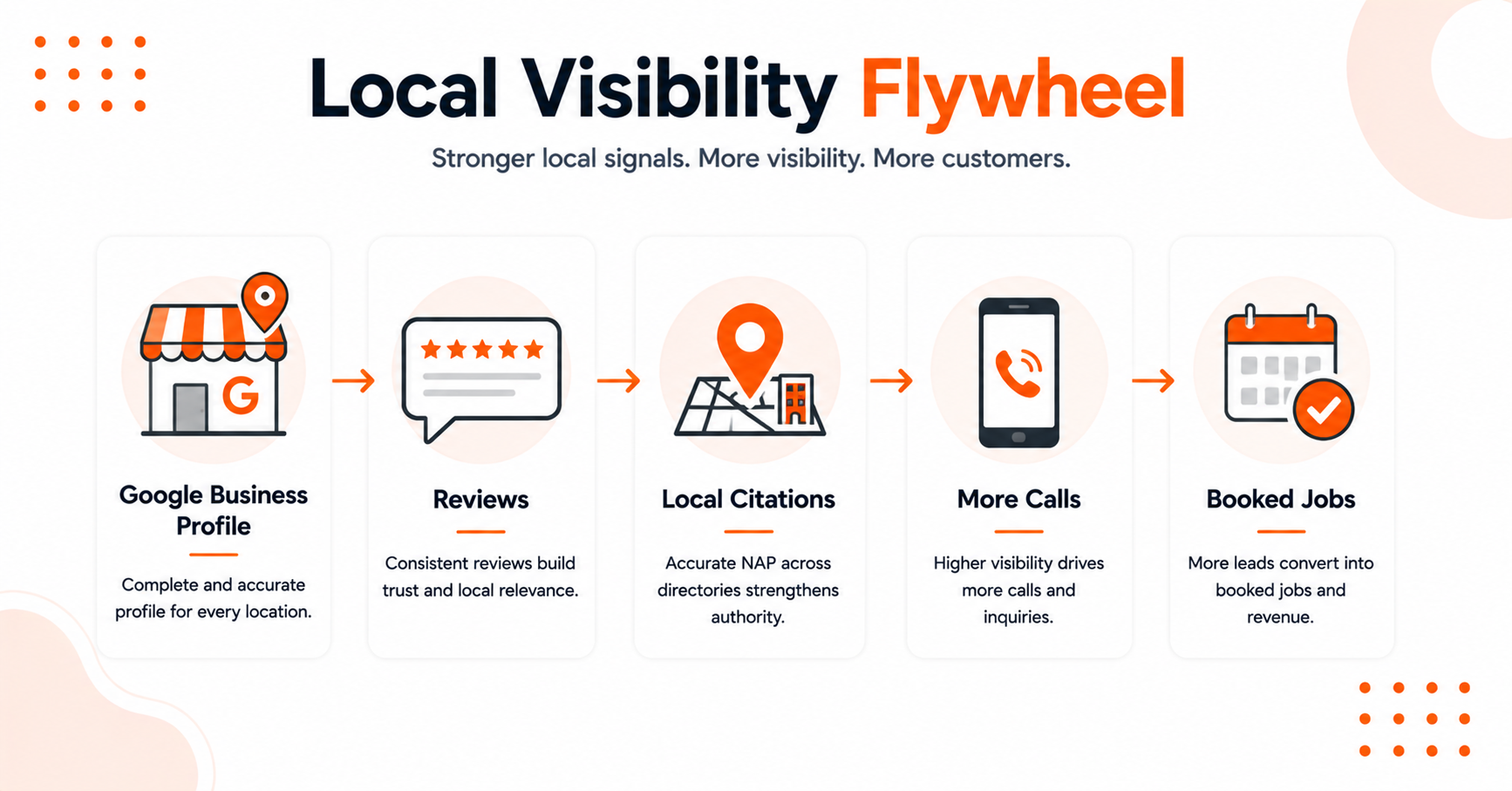
Every physical location needs its own verified profile with the correct category, address, hours, services, photos, and call link.
At 50-plus locations, small errors multiply quickly. One incorrect suite number or outdated phone line can lead to missed calls, duplicate listings, weak trust signals, and frustrated customers.
Keep your NAP data consistent everywhere. That means the same business name, address, and phone format across your website, profiles, and major directories.
Search engines do not like guessing, and neither do customers.
Build a Review Generation Process
Online reviews need a process, not a panic button. Ask for feedback immediately after the visit or completed job.
Route the request to the correct branch and reply to every review using natural, human language. Mention the service naturally when it fits.
A steady stream of recent feedback usually outperforms one large burst followed by months of silence.
Expand Your Local Authority
Build local proof around the web through chamber listings, supplier pages, trade associations, sponsorships, and community mentions.
These local citations help build authority and confirm that a branch is real, active, and trusted. Strategic link building with local suppliers and associations is also an effective way to strengthen your footprint.
Measure What Actually Matters
Track what moves the business rather than what flatters the dashboard.
Monitor:
- Non-branded traffic by market
- Calls
- Form submissions
- Booked jobs
- Direction requests
- Review velocity
- Page-level conversion rates
Rankings are nice, but market-level revenue is better.
FAQs About Multi-Location SEO Strategy
Below are a few questions related to the blog topic.
How Many Location Pages Should a Large Service Brand Have?
A large service brand should have dedicated location pages for each physical storefront or office. Once those pages are established, consider adding service-area or city-specific pages to target local keywords, but only when there is genuine search demand and enough unique local information to provide real value to the user.
Can We Use Templates Without Creating Duplicate Content?
Yes, you can use templates without creating duplicate content. Most large brands should rely on templates to maintain consistency across their site while keeping the content distinct.
To avoid issues with duplicate content, customize every page with specific local proof, unique service details, authentic photos, regional customer reviews, and branch-specific FAQs. This approach helps ensure each of your location pages feels tailored to the community it serves.
What Should We Measure Besides Rankings?
Beyond rankings, you should measure incoming calls, booked jobs, direction requests, review growth, non-branded traffic by location, and the conversion rates of your location pages. These metrics provide a clearer picture of how your multi-location SEO strategy is impacting business performance.
If a specific branch ranks well in search results but fails to generate qualified leads, it indicates that the page is not doing enough to convert local visitors into customers.
Conclusion
Managing fifty locations should not feel like juggling fifty separate marketing projects. The brands that win build one clean structure, one repeatable content system, and one reliable local data process, then give each branch the local proof that makes it credible and relevant.
That is how organic visibility compounds over time. A successful multi-location SEO strategy focuses on building brand consistency, earning trust in every market, and creating sustainable search engine rankings that drive real business growth.
Refresh helps multi-location businesses improve their online visibility through SEO, web design, and digital marketing strategies built for growth.
So, if you need help scaling your local search presence across dozens of locations, schedule a call with Refresh.
Leave a Reply